

Optimal Fitting for Horse and Rider
SADDLE FITTING
Often when we talk about saddle fitting, we think of something strictly related to performance and high-level sports. In reality, saddle fitting means adapting the saddle, or better yet, the way of saddling, to the needs of the partnership: horse and rider.
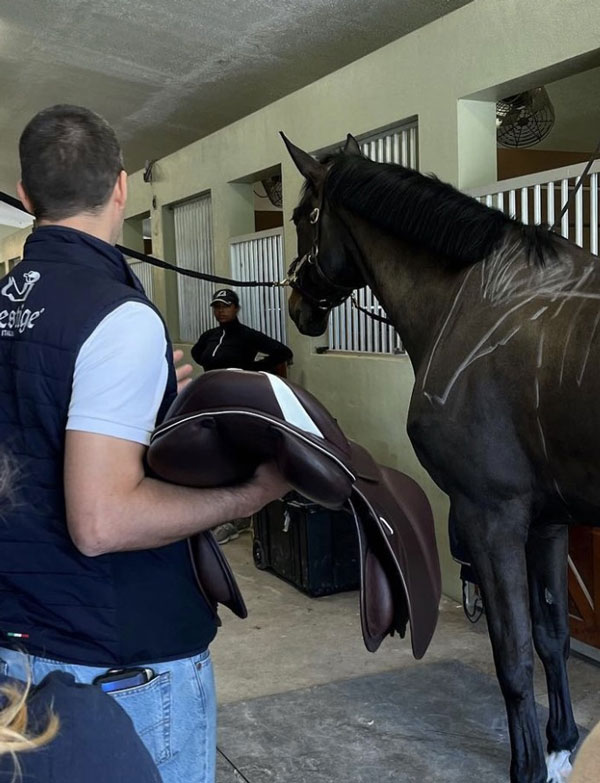
The Saddle Fitter’s objective
The primary objective of a saddle fitter is to ensure maximum comfort for the horse and optimal pressure distribution across its back. The fitter works as a specialized professional who, like veterinarians, physiotherapists, or farriers, actively contributes to the horse’s health and proper muscular development.
A saddle with an accurate fit allows the horse to move in a coordinated way, free from compensatory movements, and helps prevent the onset of health issues.
Saddle Balance
Proper saddle balance is also essential for the rider. The saddle must act as a supportive tool that facilitates maintaining a stable and functional position.
When the saddle performs its task correctly, the rider can dedicate less energy to their own posture and instead focus on other aspects, from athletic performance and technical refinement to simply enjoying a relaxing ride.
Scheduled Saddle Checks
The horse’s physique is subject to continuous changes related to age, fitness level, and training progression, so it is recommended to check the saddle periodically. A check-up is recommended every six months for horses under 8 or over 15 years old, and annually for those between 9 and 15 years.
Three Phases to a Perfect Partnership
A saddle fitting appointment is structured in three key phases, each one crucial for ensuring the saddle fits the horse’s back perfectly and enables the rider to maintain a correct and effective position.
1.
Static Evaluation: Conformation & Saddle Inspection
This first phase, conducted with the stationary horse, is dedicated to an in-depth analysis of its morphology. We will evaluate the muscular development of the back, the general conformation, and any presence of asymmetries. Simultaneously, we will perform a detailed saddle inspection: we will verify that the tree is the correct size, that the panels rest evenly on the horse’s back, and that the overall saddle balance is optimal. The goal is to identify any pressure points and asymmetries that could cause discomfort to the horse.
2.
Dynamic Observation: Movement & Interaction
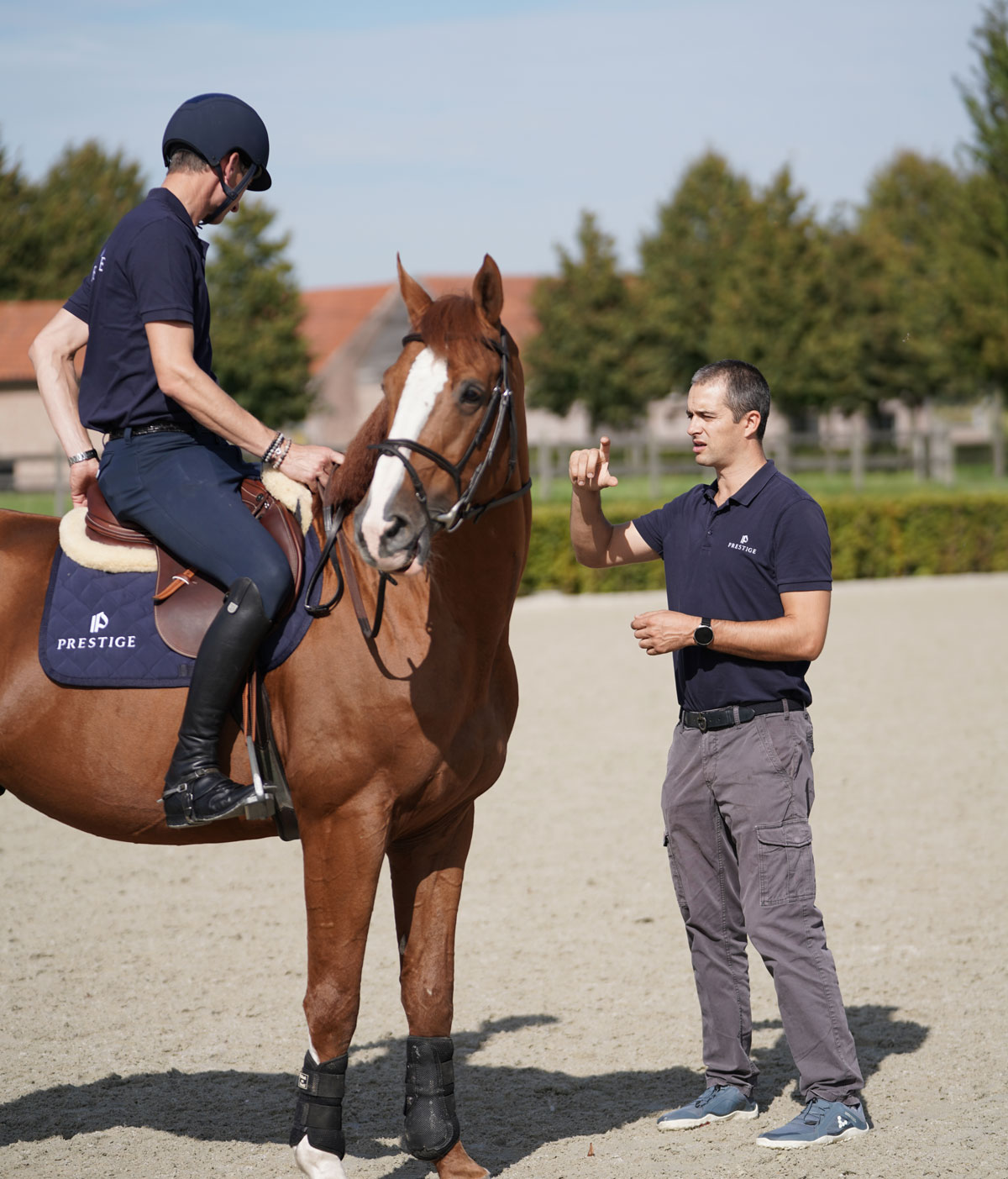
The second phase takes place with the horse in motion, usually during a normal training session. Here, the horse’s coordination and the fluidity of its movements in all gaits are carefully observed. At the same time, the rider’s position is evaluated, verifying that they can maintain a stable and balanced position without hindering the horse’s movement. This phase is often enriched by a direct discussion between the rider and instructor, who can provide valuable information about any issues encountered during daily work, such as resistance, stiffness, or difficulties in maintaining certain gaits.
3.
Saddle fitting & Fine-Tuning
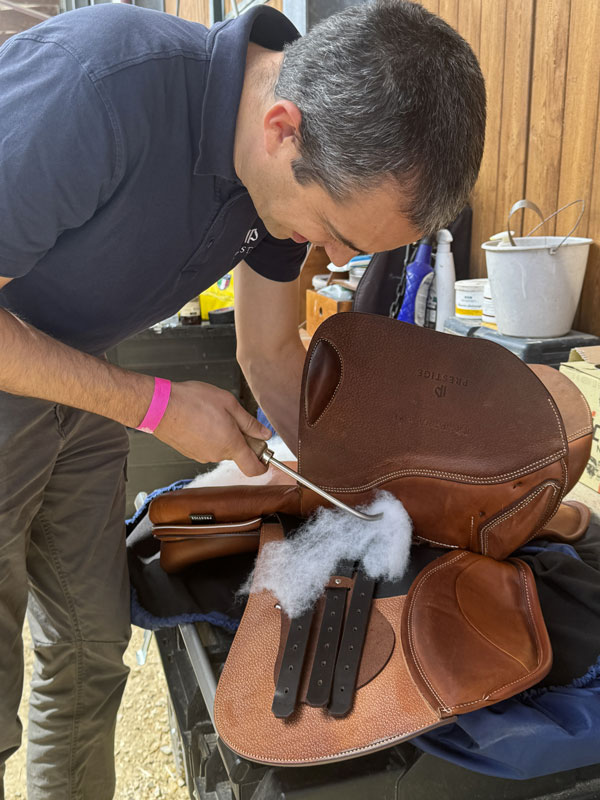
In the final phase, we proceed to modify the setup of the saddle based on the collected observations. This may include direct interventions on the saddle, such as padding or panel adjustment, or the use of compensators (like corrective saddle pads) to rebalance the support. In case of significant modifications, it is standard practice to perform a brief check during a training session to ensure that the corrections have had the desired effect and that the partnership moves in harmony.
A precise saddle fitting is the best investment you can make in your horse's long-term health and your ability to perform at your best.
Interested in finding the perfect fit? Contact us to learn more or schedule a consultation.

